
Seroquel vs. Risperdal: Comparing Antipsychotics for Mood and Sleep
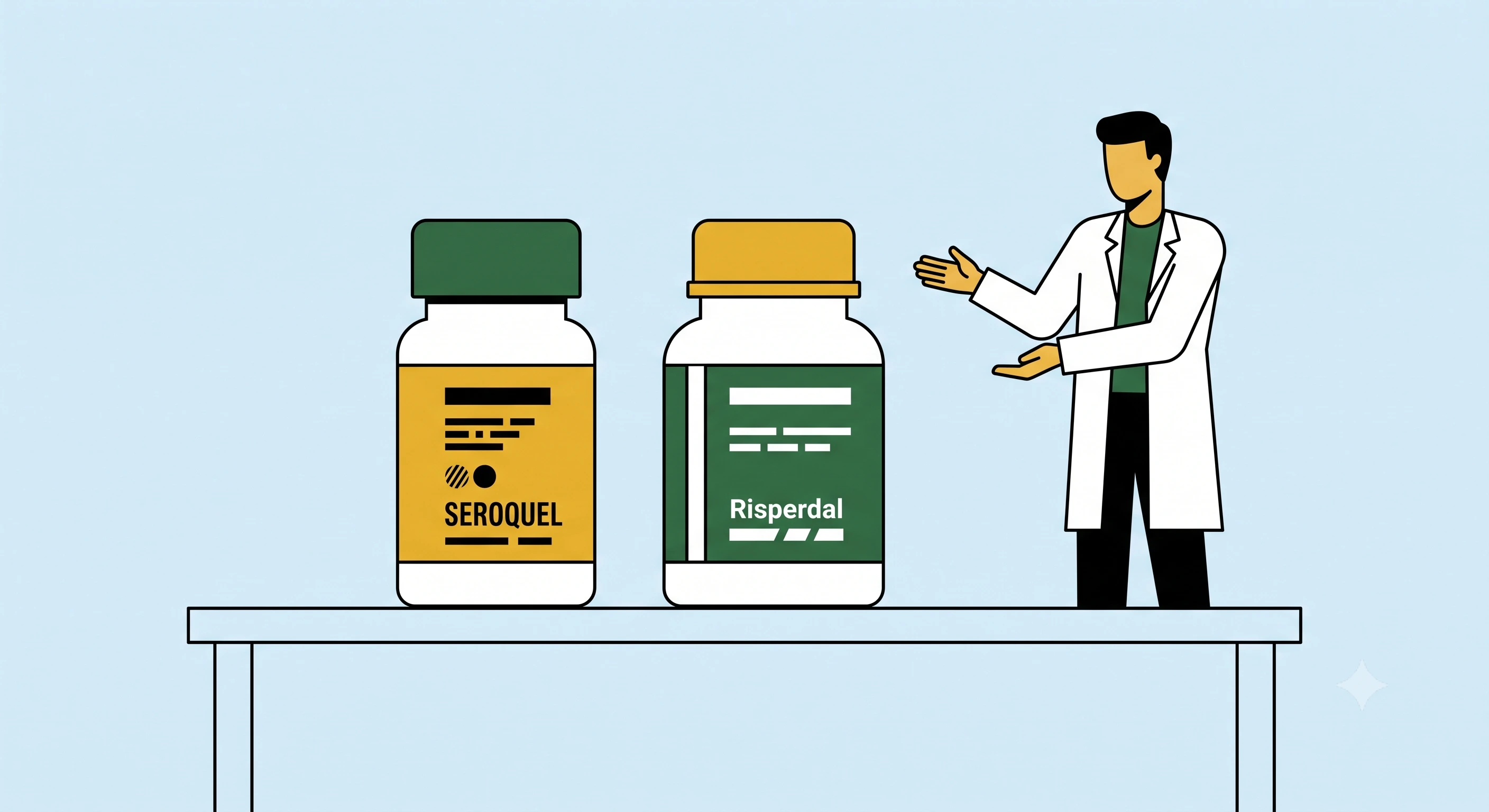
At a Glance
- Seroquel (quetiapine) provides strong sedative effects, making it a common choice when mood issues occur alongside severe insomnia.
- Risperdal (risperidone) is a more potent antipsychotic that excels at controlling mania and psychosis but carries a higher risk of movement-related side effects.
- Risperdal significantly raises prolactin hormone levels, which can lead to breast swelling or fluid production in both men and women.
- Seroquel carries a strong risk of metabolic changes, including weight gain, elevated blood sugar, and increased cholesterol.
Seroquel vs. Risperdal
Both Seroquel and Risperdal belong to the second-generation (atypical) antipsychotic class. They work primarily by modifying dopamine and serotonin receptor activity in the brain to stabilize mood, calm racing thoughts, and eliminate hallucinations or delusions.
Seroquel (Quetiapine)
Seroquel is FDA-approved for schizophrenia, bipolar disorder (both manic and depressive episodes), and as an add-on treatment for major depressive disorder. Because it strongly blocks histamine H1 receptors at low doses, Seroquel causes noticeable drowsiness, which is why doctors often prescribe it off-label for patients struggling with severe sleep disturbances.
Risperdal (Risperidone)
Risperdal is FDA-approved to treat schizophrenia, acute manic or mixed episodes in bipolar I disorder, and irritability associated with autistic disorder. Risperdal binds tightly to dopamine D2 receptors, providing rapid and powerful symptom control for severe psychotic disorders and manic agitation.
Pharmacist Tip: While low-dose Seroquel is frequently used off-label as a sleep aid, it is not an over-the-counter sleeping pill. Using any antipsychotic for routine insomnia carries long-term metabolic risks like weight gain and blood sugar changes.
Comparing Key Differences
| Feature | Seroquel (Quetiapine) | Risperdal (Risperidone) |
|---|---|---|
| Drug Class | Atypical Antipsychotic | Atypical Antipsychotic |
| Sedation / Sleep Impact | High (Very sedating) | Low to Moderate |
| Movement Side Effect Risk (EPS) | Very Low | Moderate to High (especially at doses >6 mg/day) |
| Prolactin Elevation Risk | Minimal | High (causes elevated prolactin levels) |
| Metabolic / Weight Gain Risk | High | Moderate |
Critical Safety Rules and Warnings
Antipsychotic medications require careful monitoring due to potential neurological and metabolic side effects:
Critical Warning for Risperdal: Risperdal carries a higher risk of extrapyramidal symptoms (EPS) than most other atypical antipsychotics. Watch for early signs of involuntary muscle tremors, stiffness, restlessness, or facial twitching (tardive dyskinesia), and report them to your physician immediately.
Critical Warning for Both Drugs: Neither Seroquel nor Risperdal is approved for dementia-related psychosis in elderly adults. Both drugs carry a Black Box Warning indicating an increased risk of stroke and mortality when used in elderly patients with dementia.
Frequently Asked Questions
Which medication is better for bipolar depression?
Seroquel is generally preferred for bipolar depression because it is FDA-approved for both manic and depressive phases of bipolar disorder. Risperdal is highly effective for acute mania, but is rarely used as a standalone treatment for bipolar depression.
Why does Risperdal cause elevated prolactin levels?
Risperdal strongly blocks dopamine receptors in the pituitary gland. Because dopamine naturally suppresses prolactin production, blocking it causes prolactin levels to rise. This can lead to breast swelling (gynecomastia), milk secretion, and menstrual irregularities.
Can I drink alcohol while taking these medications?
No. Alcohol dramatically increases the central nervous system sedation caused by both Seroquel and Risperdal. Combining them can lead to dangerous motor impairment, severe dizziness, and sudden blood pressure drops.
Always consult your psychiatrist or doctor to evaluate which medication suits your clinical needs. For more details on managing chronic mood stability, visit our dedicated center on Bipolar Disorder and comprehensive mental health care.
🍪 We use cookies
We use cookies to enhance your browsing experience, serve personalised content, and analyse traffic. By clicking "Accept all", you consent to our use of cookies.